The Founder's Library

Five books. The whole job.

Starting up. Being known. Raising money. Handling money. Measuring whether any of it works.

Four more are coming for the parts that have nothing to do with your mission — people, the board, compliance, and you.

FiveAvailable now
FourIn development
$9.99Every ebook
The Founder's Library — five volumes

How the set works

No book repeats another.

Book Two covers keeping a donor, so Book Four doesn't. Book Three covers whether your program works; Book Four takes that evidence and moves on. Book Five covers recording and controlling money; the compliance book, when it exists, covers the rules.

That restraint is the point. It's why each one is thinner than a general-purpose textbook and more use to you than one.

On reading order. The numbers are the order I'd build in. But if something's on fire, grab the book that matches the fire — each one says up front which others it assumes.

Passion Turned Profession

Book One · Starting up

Passion Turned Profession

Everything nobody teaches you about starting a nonprofit

Available  15 chapters · 135 pages

Most guides start at incorporation. This one starts a chapter earlier, with whether you should — because there are four honest ways to do what you're trying to do and only one is a 501(c)(3). Some people read that chapter, realize their answer points somewhere simpler, and put the book down. That's the chapter working.

If the answer's yes, the rest is procedure. Incorporating. The exemption application, what it costs, which form you probably qualify for, and what actually holds it up. A founding board that isn't three friends nodding along. And the first ninety days, where most of the avoidable damage happens.

None of it's hard. It's just unwritten, and not knowing it is the only thing that ever made it look like a wall.

Running example: Dana Reyes and Second Chapter Reading, a literacy nonprofit in Coldwater Valley.

$24.99 Paperback
$9.99 Ebook
Nobody Knows You Yet

Book Two · Being known

Nobody Knows You Yet

How a young nonprofit builds an audience of supporters and volunteers

Available  25 chapters · 188 pages

Nobody's heard of you, so you can't raise a budget, keep a volunteer, or get a school district to call you back. The advice you'll get is to post more. That doesn't touch the problem.

What does: one sentence about your work you can say without flinching. A fact your organization owns that nobody else can claim. An email list, and why it beats every platform you don't control. Volunteers who actually show up, and how to tell in advance whether they will. And the ninety days after somebody gives you money for the first time — which is when a first-time donor quietly decides whether there'll be a second, usually without telling you.

It's the longest book in the set, because this is where founders lose the most hours to work that never adds up to anything.

Running example: Aisha Bello and the North County Diaper Bank. Eleven years a labor and delivery nurse before she founded it.

$27.99 Paperback
$9.99 Ebook
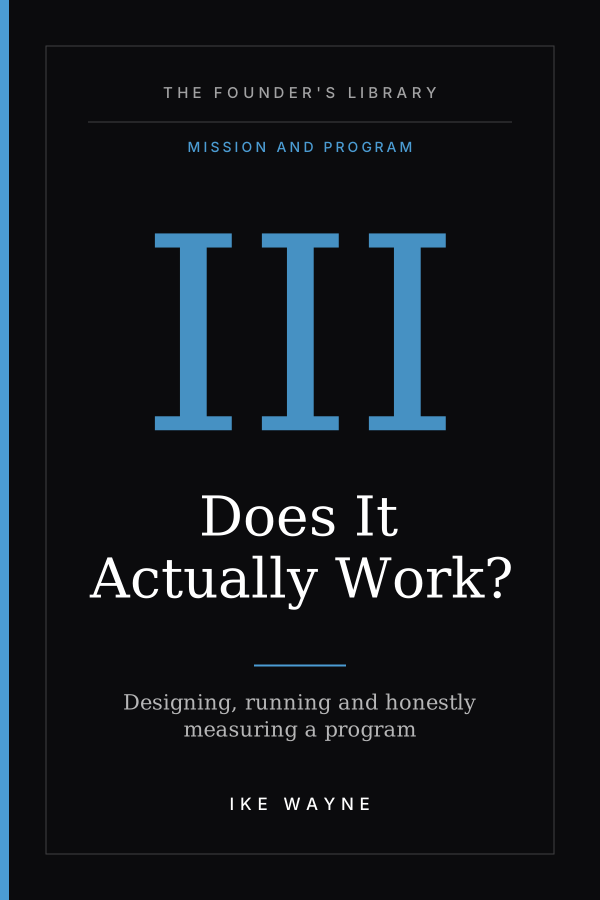
Does It Actually Work?

Book Three · Mission and program

Does It Actually Work?

Designing, running, and honestly measuring a nonprofit program

Available  25 chapters · 185 pages

Most small organizations can't answer the question in the title, and most have never been asked it by somebody who needed a real answer. That's not negligence. Nobody showed you how, and your funders have been accepting attendance numbers for years.

Attendance isn't a result. Neither is satisfaction. Neither is a number that only ever moves the right way — that's a marketing claim with a decimal point in it.

This one covers designing a program from what you think causes the change down to what happens in a single session. Picking one way to measure and using the same one at both ends. What a completion rate hides. And how to write up what you found so a funder reading closely still believes you at the end of the paragraph. Every other book leans on this one.

Running example: Second Chapter Reading. Ninety-four children over four years, 1.4 grade levels gained by the kids who finished, and a completion rate that fell from 78% to 64% the year two sites lost their after-school transport.

$27.99 Paperback
$9.99 Ebook
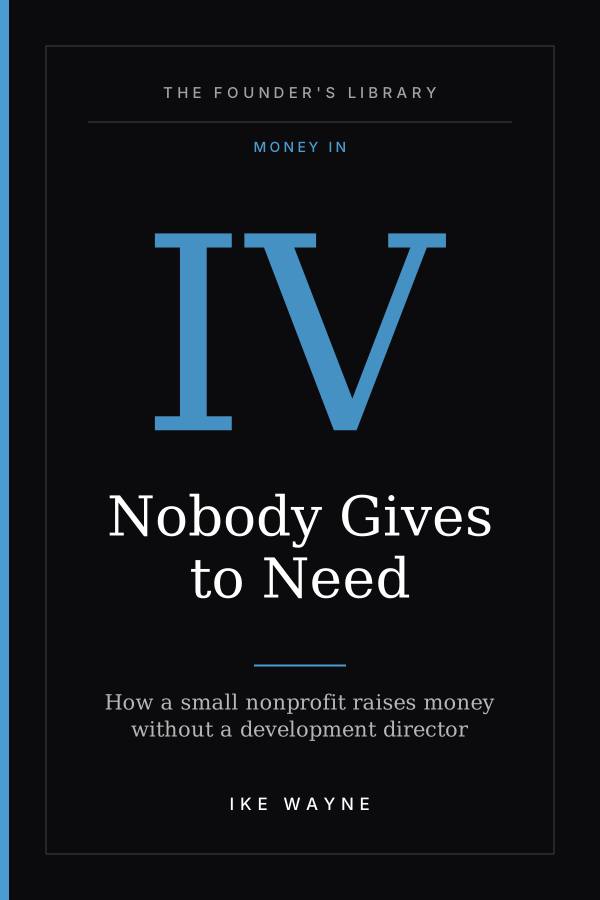
Nobody Gives to Need

Book Four · Money in

Nobody Gives to Need

How a small nonprofit raises money without a development director

Available  15 chapters · 97 pages

The title is the argument. Need is everywhere and need doesn't move money. People give for other reasons, and they're usually not the ones in your appeal.

One thing worth saying plainly first, because its absence does real damage: asking people for money isn't a sign you failed to find a real business model. It is the business model. The whole legal structure — the exemption, the deduction your donor takes — was built to make asking work.

So: what actually makes somebody give. Building a case for support out of the evidence from Book Three instead of out of feeling. Where your first fifty donors come from. How to sit across from one person and ask out loud. Monthly giving as infrastructure, not a nice extra. Finding the few foundations that might fund you instead of applying to all of them. What government money costs you. And the arithmetic that condemns most events before anybody books the room.

Running example: Second Chapter Reading — including the $94,000 county contract Dana turned down in year five, and Walter Osei, who gave $5,000 the first time anyone actually asked.

$22.99 Paperback
$9.99 Ebook
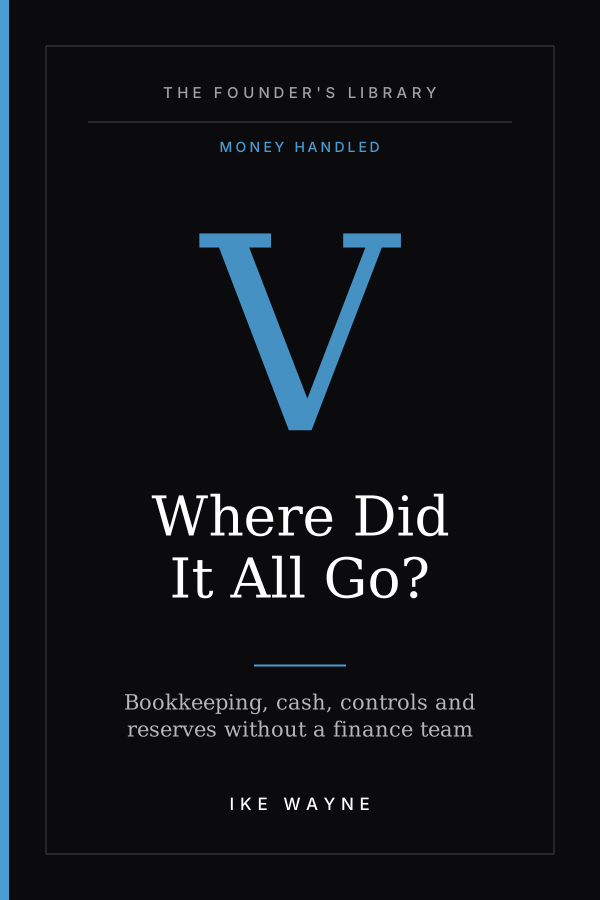
Where Did It All Go?

Book Five · Money handled

Where Did It All Go?

Bookkeeping, cash, controls and reserves for a nonprofit without a finance team

Available  14 chapters

Raise it, then don't lose it.

Two things close organizations more often than a bad program does. The first is cash flow — not a deficit on paper, but payroll on Friday and the grant landing Monday. The second is restricted money, which is money a donor said had to be spent on one specific thing, and which quietly ruins people who half-understand it.

This one covers the four questions a board will ask about your finances, bookkeeping that doesn't fall apart in year three, restricted versus unrestricted in plain language, controls when the entire staff is three people, how much to hold in reserve and the argument for holding any, reading a financial statement out loud without dread, your Form 990 as a public document rather than a tax form, and allocating overhead honestly — which for Second Chapter Reading meant admitting the real number was 22%, not the 11% Dana had reported for years.

It deliberately doesn't print audit thresholds or the federal single-audit figure. Both move, and a book that prints them starts lying the year after publication. It tells you to look up the current numbers, and where.

$24.99 Paperback
$9.99 Ebook

What's next

Four more, still owed.

Six areas account for the job. These five cover four of them. What's left is the half that has nothing to do with your mission — and it ends more founders than the mission ever does.

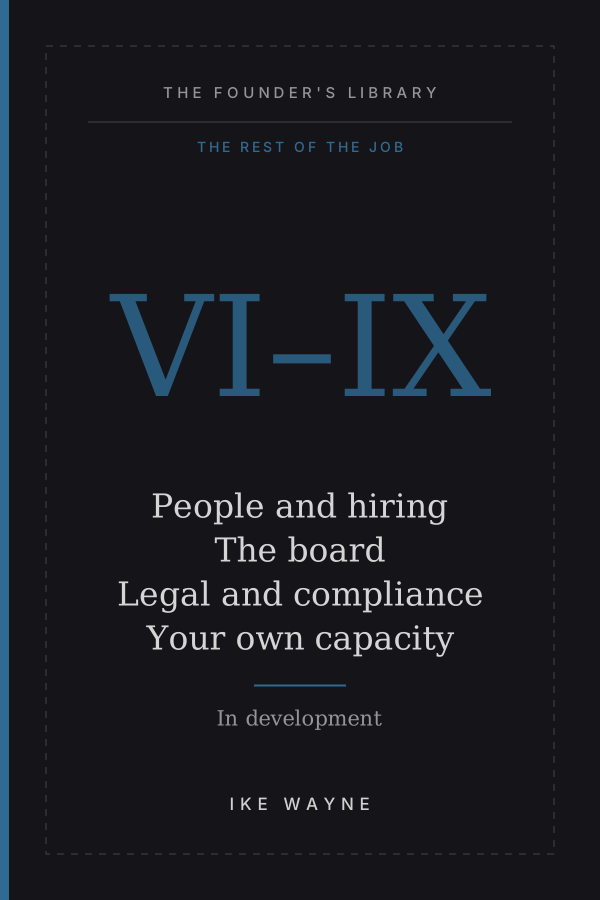
  • VI
    People and hiring  Planned

    The moment you become the bottleneck. Contractor or employee, and what getting it wrong costs. Writing a first job description that isn't just "help." Managing people you can't pay well. Letting somebody go without being cruel about it or getting sued for it.

  • VII
    The board  Planned

    A bad board ends more founders than a bad program does. The governance books are written for institutions with committees and general counsel. Nothing's written for a founder with nine friends on a board, which is where nearly everybody starts.

  • VIII
    Legal and compliance  Planned

    Registering to ask for money in your state, which almost nobody does right. Lobbying, and the line you can't cross. Income from activities unrelated to your mission. Fiscal sponsorship in both directions. Dry, unloved, and the one people buy after they've been burned once.

  • IX
    Your own capacity  Planned

    The job you actually took, as opposed to the one you thought you were taking. Burnout described accurately instead of sentimentally. Founder's syndrome from the inside, where it never looks like founder's syndrome. Building something that doesn't need you, and leaving it well.

Titles aren't settled. Working titles have a way of surviving into print, so they stay off this page until I decide.